|
Pollution Free Power Systems
"The
Future of Energy is 'Net Zero
Energy'
Austin, Texas
Palm Springs, California
Thanks electric utilities and electric grid,
|
|
Pollution Free Power Systems
"The
Future of Energy is 'Net Zero
Energy'
Austin, Texas
Palm Springs, California
Thanks electric utilities and electric grid,
|
Pollution Free Power
www.PollutionFreePower.com
What is Pollution Free Power?
Pollution Free Power is power or energy that is generated without any pollution - this includes; carbon emissions, carbon dioxide emissions or greenhouse gas emissions.
What
is "Net Zero Energy?"
Net Zero Energy - when applied to a home or commercial building, simply means that they generate as much power and energy as they consume, when measured on an annual basis.
|
|

"Changing the Way the World Makes and Uses Energy" SM

Austin, Texas

Palm Springs, California
marketing@PollutionFreePower.com
Net
Zero Energy sm
www.NetZeroEnergy.com
"The Future of Energy is Net Zero Energy!" sm
Think Beyond Solar sm
Architecture * Battery Energy Storage * Bidirectional Inverters * Bidirectional Power
Energy Efficiency Measures * Energy Master Planning * Energy Storage * Micro-Grids
Net Zero Energy * Net Zero Energy Retrofit * Solar Cogeneration * Solar Trigeneration
Homeowners, Business Owners and Commercial Building Owners;
Install our Net Zero Energy System
sm
and
ZERO out your energy bill from your electric utility!
* Zero up-front
cost for most homeowners and businesses in Austin, Texas and California
* Replace the
"brown power" from central power plants and generate your own clean
power and renewable energy that your home or business needs with our Net Zero
Energy System
sm
* YOU OWN the Net Zero Energy System sm from Day 1,
not some other company.
* This is NOT a "Solar
Lease" scheme or a "Power Purchase Agreement (PPA)."
* YOU own ALL of the benefits of YOUR Net Zero Energy System sm from Day 1, including;
30% Investment Tax Credit
5 year Accelerated Depreciation
* Free Power and Energy
What
is "Net Zero Energy?"
Net Zero Energy - when applied to a home or commercial building, simply means that they generate as much power and energy as they consume, when measured on an annual basis.
Homeowners and Business Owners located in Riverside County and Coachella
Valley
from Ontario to La Quinta and Coachella, and cities in-between,
including; Cathedral City,
Fontana, La Quinta, Ontario, Palm Springs, Rancho Mirage, San
Bernardino, Thousand Palms...
Upgrade your Home or Commercial Building in these cities to "Net
Zero Energy"
and ELIMINATE your monthly energy expenses!
For most
homeowners and business owners (in most areas of California)
we can install a Net Zero Energy System
sm for no up-front cost!
YOU OWN your new Net Zero Energy System sm and ALL of its'
benefits
including Investment Tax Credit, Accelerated Depreciation
and the "Free Power and Energy*" it produces, FROM DAY 1!
*
Free Power and Energy is generated after Net Zero Energy System sm
cost has been paid for.
For most clients, we design the Net Zero Energy system to "zero out"
their monthly electric bills.
This is NOT a
"Solar Lease" SCHEME
or a
"Power Purchase Agreement!"
Net
Zero Energy sm
www.NetZeroEnergy.com
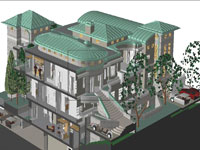
The "Desert Rose" development with 196 homes planned for Desert Hot Springs, California to be "Net Zero Energy" development - signs LOI to install proprietary Solar Cogeneration heat engine energy system that will generate MORE than 100% of the electric power needed with each unit having its' own Net Zero Energy system.
The Desert Rose Community will NOT be connected to the national electric grid but have its' own "Micro-Grid" that distributes green power and energy onsite.
Could this be the beginning of the end for traditional electric utilities, polluting "central power plants" and its' brown power along with their ever-increasing, already-high electric rates and inefficient electric grid?
More about "Net Zero Energy"
The U.S. Army now has a Net Zero Energy initiative to help reduce/eliminate America's use of foreign oil - particularly oil from muslim/middle-east countries - which saves the lives of our brave soldiers in the military.
At the heart of a Net Zero Energy Building sm is the idea that any building can meet its energy requirements from low-cost, locally available, nonpolluting, renewable sources, like Solar Trigenerationsm Energy Systems. Solar Trigenerationsm Energy Systems are the idea whose time has come, to make Net Zero Energy Building sm commonplace.
Solar Trigenerationsm Energy Systems Provide All of the Cooling, Heating & Power, for Any Size Building, with only the Energy of the Sun. Solar Trigenerationsm Energy Systems Provide Simultaneous Cooling, Heating & Power whether it is 12 Noon, or 12 Midnight, and WITHOUT having to rely on the electric grid!
The Department of Energy developed the Commercial Building Initiative (CBI) and is pursuing the goal of marketable Net Zero Energy Building through research and partnerships.
The DOE's CBI has developed tools and resources to help the commercial buildings industry improve energy efficiency at various levels of energy savings.
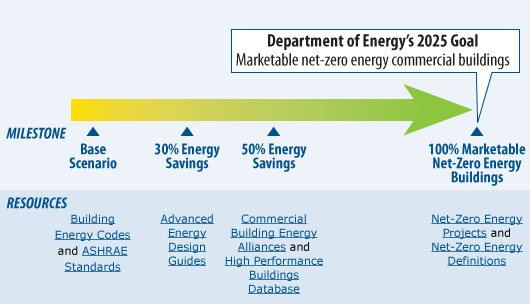
Department
of Energy's "Net Zero Energy" 2025 Goal
Marketable Net Zero Energy Commercial Buildings
______________________
Net Zero Energy Buildings Are
The Next Frontier
http://www.sustainablebusiness.com/index.cfm/go/news.display/id/23361
Revenue from net-zero energy buildings will grow rapidly over the next 20 years, reaching almost $690 billion
by 2020 and nearly $1.3 trillion by 2035, projects Pike Research. That's a compound annual growth rate of 43%.
______________________
Revenues From Net Zero Energy Buildings
to Reach $1.3 Trillion by 2035
http://www.navigantresearch.com/newsroom/revenue-from-net-zero-energy-buildings-to-reach-1-3-trillion-by-2035
______________________
Net Zero Energy Buildings Are Coming,
What About The Buildings Already Standing?
http://www.forbes.com/sites/justingerdes/2012/02/28/net-zero-energy-buildings-are-coming-what-about-the-buildings-already-standing/
About us:
The founder of the Renewable Energy Institute (REI) was first involved in Net Zero Energy buildings and Solar Trigeneration sm energy system in 2001 - 2002. This started with family-owned real estate developments in Northern and Southern California. This interest was accelerated when REI's founder was introduced to the President of a solar company in Los Angeles and their client, the Audubon Nature Center at Deb's Park (Los Angeles) that was planning to build a new 5,000 sf office and conference center. Except, the new building for the Audubon Nature Center was about 1/2 mile from the end of the power lines and a very costly extension of the power lines to their new facility forced them to consider a solar solution. When the Audubon Nature Center's new 5,000 sf office and conference center was completed in 2003, the facility not only featured the Solar Trigeneration sm energy system - they were awarded one of the first Platinum LEED Awards by the USGBC - and the powerlines were still 1/2 mile away! To this day, 100% of the power and energy for the Audubon Nature Center's building is supplied by the Solar Trigeneration sm energy system - whether at 12 noon, or 12 midnite. (The Audubon's facility also includes a battery energy storage system for back-up power generated by the Rooftop PV panels as well as a thermal energy storage system that stores the excess hot water generated by the evacuated tube collectors).
These early projects led to more client inquiries and engagements with real estate developers, architects and building owners in Southern California, Louisiana and Texas and the advent of a growing Net Zero Energy industry along with Solar Cogeneration sm & Solar Trigeneration sm energy systems. This culminated in a family-owned 200 (Net Zero Energy) home real estate development in Desert Hot Springs which has been approved but not yet constructed.
During this time, the REI's Founder became a volunteer and Advisor to the University of Texas' Solar Decathlon Competition. He coordinated the donation of the same solar thermal system used at the Audubon Nature Center's facility in Los Angeles, for UT's entry in the 2002 Solar Decathlon Competition in Washington, D.C. UT's entry in the Solar Decathlon Competition placed 1st in the domestic hot water competition that year (2002) and 4th overall, out of 20 universities that had entered.
In 2006, after Hurricane Kattrina devastated New Orleans, the REI was formed and several of the REI's board members and a Professor from the University of Texas School of Architecture formed a design team to enter the Brad Pitt/Global Green Rebuild New Orleans Competition. Our entry also focused on sustainable building solutions and materials as well as the Net Zero Energy concepts, incorporating once again, a Solar Trigeneration sm energy system.
Today, the REI "Flagship" has chartered the Renewable Energy Institute in Florida, with discussions to open REI state chapters in Arizona, California, Hawaii, Minnesota and Oregon.
The REI supports greater use of Net Zero Energy systems by architects, builders, homeowners and owners of commercial buildings. This includes "upgrading" homes and commercial buildings to Net Zero Energy. The REI provides Net Zero Energy; advertising, business development, conferences, e-commerce, education, marketing, online marketing, public relations, renewable energy, sales and strategic marketing solutions for architects, builders, cities, colleges, HVAC contractors, Net Zero Energy developers, real estate developers and universities.
Net
Zero Energy Buildings Are Next Frontier
http://www.sustainablebusiness.com/index.cfm/go/news.display/id/23361
Net
Zero Energy Market to Become $1.3 Trillion/year Industry by 2035
http://www.navigantresearch.com/newsroom/revenue-from-net-zero-energy-buildings-to-reach-1-3-trillion-by-2035
Net Zero Energy Buildings Are Coming - What About The Buildings Already
Standing?
http://www.forbes.com/sites/justingerdes/2012/02/28/net-zero-energy-buildings-are-coming-what-about-the-buildings-already-standing/
American
Energy Plan sm
www.AmericanEnergyPlan.org
3-5
million new jobs
Fuel Savings of > $1.50/gallon
American Energy Independence
Ends the worst economic depression of all time

NO FOREIGN OIL!
Support
Renewable Energy
and America's
Renewable Energy Technologies
resources and companies!
“spending
hundreds and hundreds and hundreds of billions of dollars every year for oil,
much of it from the Middle East, is just about the single stupidest thing that
modern society could possibly do. It’s very difficult to think of anything
more idiotic than that.”
~ R. James Woolsey, Jr., former
Director of the CIA
|
Price of Addiction ### to Foreign Oil |
According to R. James Woolsey, for Director of the Central Intelligence Agency, “The basic insight is to realize that global warming, the geopolitics of oil, and warfare in the Persian Gulf are not separate problems — they are aspects of a single problem, the West’s dependence on oil."
Architects * Free
Power and Energy * Geothermal Heating and Cooling *
Net Zero Energy Upgrades
Real Estate Master Planning * Solar Cogeneration * Solar Heating and Cooling * Solar Trigeneration
We support the Renewable Energy Institute by donating a portion of our profits to the
Renewable Energy Institute
in their efforts to reduce fossil fuel use by transitioning to Renewable
Energy Technologies and reducing/eliminating Carbon
Emissions, Carbon
Dioxide Emissions and Greenhouse
Gas Emissions.
The Renewable Energy Institute
is "Changing The Way The World Makes and Uses Energy" SM
by providing research & development, funding and resources that reduce the
cost of Renewable
Energy Technologies and
making a faster transition to Carbon Free
Energy, Clean
Power Generation, & Pollution Free
Power."
Follow us on Twitter:
#PollutionFree


"Changing the Way the World Makes and Uses Energy"
Pollution Free Power
www.PollutionFreePower.com
Austin, Texas
Palm Springs, California
marketing@PollutionFreePower.com
PollutionFreePower.com
Copyright © 2003
All Rights Reserved